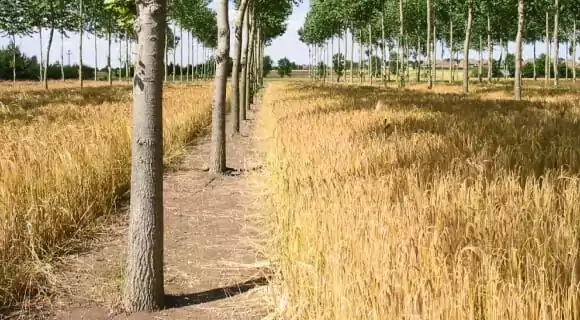
The biggest challenge with timber farming is the waiting period. Mahogany takes 12-15 years, Teak takes 18-20 years, and during those years, your land generates zero timber income. But your land does not have to sit idle. Intercropping is the strategy that turns your plantation from a pure investment into a cash-flowing farm from Year 1.
Why intercropping works with timber
In the first 3-4 years of a timber plantation, the tree canopy is still open, allowing 60-80% sunlight to reach the ground. This window is perfect for growing shade-tolerant and short-cycle crops between the rows. As the canopy closes by Year 5-6, you transition to shade-loving crops or stop intercropping entirely.
The income from intercropping serves three purposes: it offsets your annual maintenance costs (Rs 8,000-12,000 per acre), provides regular cash flow for household expenses, and improves soil fertility through organic matter and nitrogen fixation.
Best intercropping combinations for Bengal
Years 1-2: High-value spices
Turmeric: Plant between timber rows in May-June, harvest in January-February. Yield: 8-12 quintals per acre. Market price: Rs 6,000-10,000 per quintal. Net income: Rs 30,000-50,000 per acre after costs. Turmeric thrives in the partial shade of young Mahogany and improves soil structure.
Ginger: Similar planting cycle to turmeric. Yield: 6-8 quintals per acre. Price: Rs 8,000-15,000 per quintal. Net income: Rs 25,000-45,000 per acre. Ginger prefers well-drained loamy soil, which is the same requirement as Mahogany.
Years 1-3: Seasonal vegetables
Brinjal, Chilli, and Okra: Kharif season crops that grow well between timber rows. Combined income: Rs 20,000-35,000 per acre per season. These are labour-intensive but offer the fastest cash returns.
Bottle gourd and Ridge gourd: Can be trained on trellises between tree rows. Income: Rs 15,000-25,000 per acre.
Years 2-4: Pulses and oilseeds
Masoor dal (lentil): Rabi season crop, November-March. Yield: 3-5 quintals per acre. Income: Rs 15,000-25,000 per acre. Bonus: lentils fix atmospheric nitrogen in the soil, benefiting your timber trees.
Mustard: Another Rabi option. Yield: 4-6 quintals per acre. Income: Rs 12,000-20,000 per acre.
Years 3-6: Shade-tolerant crops
Elephant foot yam (Ol): Grows well in partial shade. Single crop cycle: 8-10 months. Income: Rs 40,000-60,000 per acre. Very popular in Bengal markets.
Arrowroot: Shade-tolerant root crop. Income: Rs 20,000-30,000 per acre. Low maintenance.
Income summary for a 5-acre Mahogany plantation
If you plant turmeric and seasonal vegetables in Years 1-3, then transition to elephant foot yam in Years 3-5, your total intercropping income over 5 years could range from Rs 4-6 lakh for the entire 5-acre plot. This comfortably covers your plantation maintenance costs and provides additional household income.
After Year 5-6, the canopy closes and you rely on thinning income (Year 7-8) and finally the main harvest. The intercropping phase bridges the gap and makes your timber investment practically self-financing.
Practical tips
Maintain at least 3 feet of clear space around each tree trunk to avoid root competition. Use organic compost from intercrop residues as mulch for your timber trees. Rotate crops each year to avoid soil depletion. Keep records of your costs and income for each crop, as this data helps you claim agricultural income tax exemption.
For detailed financial modelling of intercropping income alongside timber returns, use our free Timber ROI Calculator at FarmingBengal.in/free-tools/.