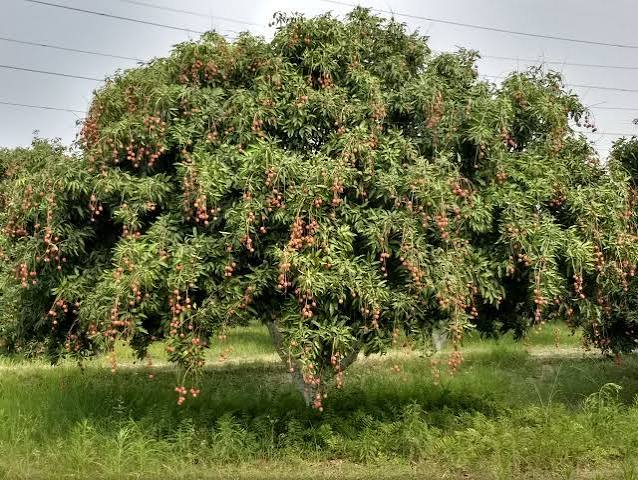
If you’ve driven through the Malda–Murshidabad belt in May, you already know what a litchi orchard in full fruit looks like — branches bending under clusters of pink-red fruit, and roadside sellers doing brisk business before the fruit even reaches Kolkata’s markets. It’s tempting to look at that and think “I should plant a few acres of this.” I get asked about litchi almost as often as I get asked about lime, so let’s actually work through whether it makes financial sense — with real numbers, not the inflated “lakhs per acre” claims that show up in most farming blogs.
Why Litchi Suits This Part of Bengal
Litchi is a sub-tropical crop that wants a specific climate rhythm: cool, dry winters for flower bud formation, followed by a humid, warm summer for fruit development. The Gangetic plains around Murshidabad and Malda tick most of these boxes reasonably well, which is exactly why this belt — along with parts of Bihar — has become one of India’s established litchi-growing regions. That said, litchi is fussier than lime or mango about a few things: it dislikes waterlogging, it’s sensitive to hot, dry winds during fruit-set (March–April), and young trees need frost and heat protection for their first few years. If your plot has heavy clay with poor drainage, this is not the crop to force onto it.
Choosing the Right Variety
For this belt, Bombai and China varieties are the most commonly planted and reliably marketable — they’re well-adapted to Bengal’s conditions and have an established local buyer base. The premium Shahi variety (Bihar’s GI-tagged pride) can fetch better prices but is more climate-particular and better suited slightly further north. Unless you have a specific export or premium-retail buyer lined up, I’d steer a first-time grower toward Bombai or China for a more dependable, if less glamorous, return.
Planting Density and Establishment
Litchi trees are large — mature canopies can spread 8-10 metres wide — so this isn’t a crop you can pack in tightly like lime or papaya. A realistic planting density for one acre works out to roughly 65-70 trees, spaced about 7-8 metres apart, giving the canopy room to develop over the 15-20+ year productive life of the orchard.
Year-by-Year Investment: What It Actually Costs
Here’s where most online guides get vague. Below is a realistic, conservative cost breakdown for a 1-acre litchi orchard in this region — grafted saplings, not seedlings, since seedling-grown litchi is unreliable for fruit quality and takes years longer to bear.
| Year | Activity | Estimated Cost (₹/acre) |
|---|---|---|
| Year 1 | Land prep, pits, grafted saplings (65-70), FYM, fencing, initial irrigation setup | ₹75,000 – 90,000 |
| Year 2-4 | Maintenance, irrigation, weeding, mulching, protective care (pre-bearing) | ₹15,000 – 20,000/year |
| Year 5 onward | Full maintenance — fertigation, pruning, pest/disease management, harvesting labour | ₹28,000 – 35,000/year |
This is a genuinely patient crop. Unlike lime (fruiting from year 2-3) or papaya (fruiting within a year), litchi trees typically start bearing commercially only from year 4-5, and don’t hit full productive capacity until year 8-10. If your financial plan needs income in year 2 or 3, litchi alone won’t get you there — this is why most experienced growers intercrop the first 3-4 years with vegetables, papaya, or turmeric to generate interim cash flow. How those intercrops compare as standalone investments is covered in the West Bengal Farming Investment Guide, which is useful if you’re weighing up options for those early years.
Yield Timeline
Yield builds gradually and is very age-dependent:
| Orchard Age | Approx. Yield per Acre |
|---|---|
| Year 4-5 (first bearing) | 1.5 – 2 tonnes |
| Year 7-9 (developing) | 3 – 4.5 tonnes |
| Year 10+ (mature) | 5 – 6 tonnes |
The Real Numbers: Farm-Gate Profitability Calculation
This is the part that matters most, and where I’ll be blunt: most litchi articles quote retail Kolkata or Delhi market prices — ₹150-250/kg — to arrive at eye-popping “lakhs per acre” profit figures. That is not what you, as a grower, actually receive. What lands in your hand is the farm-gate or local mandi price, after the trader’s, transporter’s, and commission agent’s margins are already accounted for. In the Bengal-Bihar belt, that farm-gate price for non-premium varieties like Bombai/China typically runs much lower than the retail figure — and it swings hard depending on how early or late in the short May-June season you’re selling.
Here’s a mature-orchard (year 10+, ~5.5 tonnes/acre) profitability picture across three realistic farm-gate price scenarios:
| Scenario | Farm-Gate Price | Gross Revenue (5.5 t) | Annual Maintenance Cost | Net Profit/Acre |
|---|---|---|---|---|
| Low (glut/late season, local mandi) | ₹35/kg | ₹1,92,500 | ₹32,000 | ₹1,60,500 |
| Mid (typical season, decent buyer) | ₹55/kg | ₹3,02,500 | ₹32,000 | ₹2,70,500 |
| High (early season/good variety premium) | ₹80/kg | ₹4,40,000 | ₹32,000 | ₹4,08,000 |
In plain terms: once your orchard is fully mature (year 10+), a realistic, non-hyped annual net return sits somewhere in the ₹1.6-4 lakh per acre range, depending heavily on when in the season you sell and who you sell to — not the ₹5+ lakh figures some blogs throw around. The gap between the low and high scenario in this table is almost entirely about market access and timing, not growing technique. A grower who can hold a few days for early-market premium pricing, or who has a direct buyer instead of relying on the local mandi on a glut day, can meaningfully shift their outcome from the low end to the high end of this range.
Break-even: Given the establishment and pre-bearing costs (roughly ₹1.35-1.5 lakh cumulative by year 4), and profits only becoming meaningful from year 5-6 onward, full break-even on a standalone litchi orchard typically lands around year 6-8 — later than lime, comparable to mango.
Risks Worth Knowing Before You Plant
- Short shelf life: Litchi has only 2-3 days of room-temperature shelf life without cold storage. If you don’t have cold-chain access or a buyer who can move fruit fast, post-harvest loss eats directly into your margin.
- Fruit cracking: Irregular watering — dry spells followed by heavy irrigation or rain right before harvest — causes fruit to crack, which downgrades your entire lot to lower-price categories.
- Weather sensitivity at flowering: Unseasonal rain or hot dry winds during the February-March flowering window can knock out a significant chunk of that year’s yield with no recourse.
- Long payback period: This is the single biggest practical risk — you’re committing land and capital for 5+ years before seeing real returns, with essentially nothing in years 1-3 unless you intercrop.
Essential Tools for a Litchi Orchard
A few tools genuinely make a difference in yield quality and labour efficiency for litchi specifically — good pruning shears matter more here than for most fruit crops, since canopy management directly affects fruit-cracking risk and next season’s flowering.
👉 Browse pruning shears and secateurs on Amazon
👉 Browse garden sprayers for pest/disease management
As an Amazon Associate, farmingbengal.in earns from qualifying purchases made through these links, at no extra cost to you.
Is Litchi Farming Worth It in Murshidabad?
Honestly — yes, but only if you’re planting it as part of a longer-horizon land strategy, not looking for quick returns. The 4-5 year wait before any real income, and the 8-10 year wait for full maturity, means litchi rewards patience more than any other crop I’ve compared in this region. If your land and financial plan can absorb that timeline — ideally by intercropping the early years — a mature litchi orchard is a genuinely solid, low-recurring-effort income source for decades once established. If you need income sooner, pair it with a faster-yielding crop on the same land rather than betting everything on litchi alone.
References & Further Reading
- National Horticulture Board — Litchi Project Profile (cost of cultivation, establishment)
- ICAR-Indian Institute of Horticultural Research — Litchi cultivation & farm-gate pricing
- Commodity Online — Live Litchi Mandi Prices (India)
- Commodity Online — Litchi Mandi Prices, Bihar
These are cited for background data and current mandi-price context; the profitability figures above are farmingbengal.in’s own conservative estimates, not figures quoted directly from these sources.
Frequently Asked Questions
How many years before a litchi tree gives fruit? Commercial bearing typically starts in year 4-5 from grafted saplings, with full maturity reached around year 8-10.
What is the profit per acre for litchi farming in West Bengal? For a mature orchard, realistic net profit ranges from roughly ₹1.6-4 lakh per acre annually, depending on farm-gate selling price and season timing — not the higher figures based on retail pricing that some sources quote.
Which litchi variety is best for Murshidabad and Malda? Bombai and China varieties are the most reliably suited and commercially established in this belt for first-time growers.
Is litchi more profitable than mango or lime? Per-kg farm-gate prices for litchi are higher than mango or lime, but the longer pre-bearing period and shorter shelf life mean the effective profitability depends heavily on market access — it isn’t automatically the better choice.