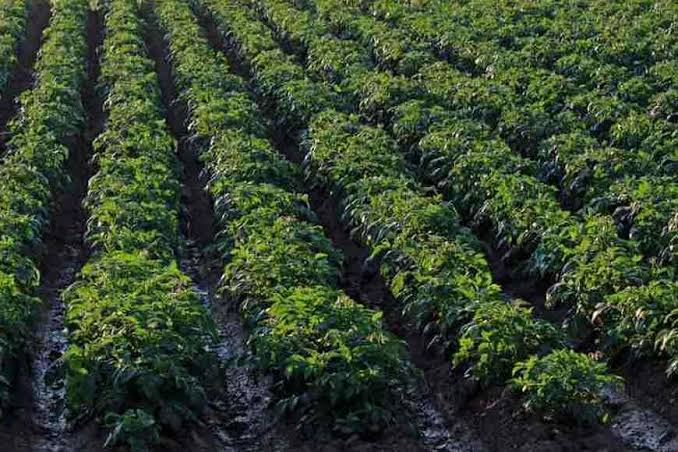
West Bengal is one of India’s most agriculturally diverse states — from the tea gardens of the Dooars to the fruit belts of Malda and Murshidabad, the rice bowls of Burdwan, and the vegetable clusters ringing Kolkata. For anyone considering farming as an investment — whether a first-time buyer, an NRI, a retiring professional, or someone simply diversifying beyond fixed deposits and mutual funds — West Bengal offers real, workable opportunity. But it also comes with rules, risks, and realities that most generic “how to start farming in India” articles never cover.
This guide pulls together everything on FarmingBengal.in into one place: how much land you can legally own, which crops actually make money at real mandi prices, which government schemes reduce your risk, and which tools and inputs are worth buying. Think of this as your starting point — every section links to a deeper, dedicated guide.
Why West Bengal, Specifically
West Bengal’s advantage isn’t glamorous — it’s structural. The state has:
- High rainfall and dense river network (Ganga-Padma, Bhagirathi-Hooghly, Teesta), reducing irrigation dependency compared to drier states
- Multiple agro-climatic zones in one state — alluvial plains, laterite tracts, coastal saline belts, and sub-Himalayan terai — so different crops suit different districts
- Proximity to a 15-million-plus consumption market (Kolkata metro) for perishables like fruit and vegetables
- Comparatively low entry land prices in districts like Murshidabad, Malda, and Nadia versus western and southern Indian farm belts
- An active state subsidy ecosystem (covered below) that lowers the capital needed to start
None of this means farming here is risk-free. Land title verification, water availability at the specific plot, and realistic yield assumptions matter more than any state-level advantage.
Step 1: Understand the Land Rules Before You Buy
This is the step most first-time investors skip — and the one that causes the most regret later.
Ownership ceiling. Under the West Bengal Land Reforms Act, 1955, a family unit is capped on how much agricultural land it can hold — the widely cited limit is around 24.7 acres (roughly 7 hectares), though the applicable figure depends on family composition and land classification. A single person or family can own a maximum of 25 acres of agricultural land in the state. If you’re buying at scale — say for a plantation or agri-business — get this checked against current holdings before you sign anything.
Who can buy. Unlike some other states, West Bengal does not impose a classic “agriculturist-only” condition on buyers of agricultural land. However, selling agricultural land to a non-farmer can require government approval in some cases, to prevent land being diverted from agricultural use — this cuts both ways and is worth checking with a local lawyer before you commit funds. NRIs and OCIs cannot directly purchase agricultural land under RBI/FEMA rules, though they can inherit it.
Verify before you pay. A registered sale deed alone is not proof of a safe purchase — you also need to complete mutation and verify the Record of Rights (RoR) on Banglarbhumi. We’ve written a full walkthrough of this process — see our Banglarbhumi Land Records Guide for step-by-step instructions on checking RoR, plot maps, and mutation status before you buy.
Non-farmers converting land use. If your plan involves any construction (farmhouse, storage shed, processing unit) on agricultural land, note that the Act restricts construction on agricultural land without proper conversion — factor this into your budget and timeline, not just your crop plan.
Step 2: Choose the Right Crop for the Right District
The single biggest mistake in agricultural investing is picking a crop because it’s fashionable, not because the soil, climate, and market logistics of your specific plot support it. On FarmingBengal.in we model profitability at farm-gate/mandi prices, not retail — retail projections consistently overstate real returns and lead to disappointed first-year investors.
Here’s a quick orientation across the crops we’ve modeled in depth:
Litchi. Strong fit for Murshidabad, Malda, and parts of North Bengal with well-drained loam. Trees take 4–5 years to reach full bearing but have a long productive life once established. See our full Litchi Cultivation & Profitability Guide for year-by-year cost and yield tables.
Kagzi Lime (Nimbu). Faster to first harvest than litchi, tolerant of a wider range of soils, and has consistent year-round mandi demand. Read our Kagzi Lime Farming Guide for the complete cost-benefit breakdown.
Mango, Banana, Guava, Papaya. All viable in the right district and soil type, with very different capital and payback profiles — banana and papaya return capital fastest (12–18 months), while mango is a longer-horizon orchard investment.
Hydroponics (soil-less/controlled environment). A fundamentally different capital model — high upfront cost, low land requirement, and profitability that depends far more on your sales channel (mandi vs. premium/direct-to-buyer) than on the growing method itself. Not a shortcut to guaranteed margins; treat it as a specialised, higher-risk track.
Paddy, jute, and staple crops. Lower margin per acre than fruit horticulture in most cases, but lower risk, well-supported by MSP mechanisms and state procurement, and a sensible base layer if you want stable income alongside a horticultural investment.
Before committing capital to any crop, run the numbers through our Farm ROI Calculator (free tool on this site) using current mandi price data, not headline retail prices you may have seen quoted elsewhere.
Step 3: Use the Government Schemes That Reduce Your Risk
West Bengal runs several farmer-support schemes that materially change the economics of a small or medium holding. As of 2026, the key ones are:
Krishak Bandhu. The state’s flagship income-support scheme. It provides direct financial assistance to registered farmers, paid in two instalments across the Kharif and Rabi seasons, with farmers holding less than one acre receiving support on a pro-rata basis. In the event of a registered farmer’s death, the scheme also provides a lump-sum benefit to the family. This isn’t large enough to be an investment thesis on its own, but it’s a genuine offset against input costs, and registration is straightforward through the official state portal.
Farm mechanization / equipment subsidy (FMS). Subsidised rates on approved farm machinery and equipment, applied for through the state’s agriculture department portal, typically before the Kharif season application window opens. If your farm plan includes power tillers, pumps, or sprayers, check this before buying at full retail price.
Soil Health Card scheme. Free soil testing that should be your first step on any new plot, before you finalize a crop choice — it tells you what the land can actually support, rather than what you hope it can.
For all of these, the practical advice is consistent with how we approach every platform or scheme on this site: get the eligibility criteria and current application window confirmed directly on the official government portal before budgeting around it, since scheme parameters are revised periodically.
Step 4: Budget Realistically — What Farming Actually Costs
A commercial planting is not a one-time expense. Build your budget across these buckets:
- Land acquisition and legal verification — purchase price, registration/stamp duty, mutation costs, and a local lawyer’s fee for title verification
- Land preparation — leveling, bunding, irrigation infrastructure (borewell/pump/drip line)
- Planting material — certified saplings or seed from a reputable nursery; this is not a place to cut costs, since a poor-quality sapling costs the same land and years to discover as a good one
- Recurring inputs — fertilizer, pest management, labor for weeding and harvest
- Pre-bearing carrying cost — for orchard crops, the 2–5 years before meaningful yield, during which the land generates cost but not income
- Post-harvest and market access — transport to mandi, any storage/cold-chain need, and commission/handling charges
A handful of essential, reasonably priced tools consistently show up across our farm-tool recommendations for small and medium holdings in West Bengal — see our full Farm Tools Guide for specific models and price ranges, including:
- Manual/battery knapsack sprayers
- Soil pH and moisture testing kits
- Pruning shears and secateurs for orchard maintenance
- Drip irrigation starter kits for smallholders
As an Amazon Associate, FarmingBengal.in earns from qualifying purchases made through the links above, at no extra cost to you.
Step 5: Model Your Returns Conservatively
Whatever crop you choose, model three scenarios — conservative, base, and optimistic — and make your go/no-go decision on the conservative case, not the optimistic one. Specifically:
- Use farm-gate/mandi prices, sourced from Commodity Online or your district’s actual mandi data, not retail shelf prices
- Assume at least one bad-yield year in any five-year window (pest, weather, or price crash) and check whether your plan survives it
- Separate your land appreciation thesis from your crop income thesis — they’re different bets with different time horizons, and conflating them leads to overpaying for land on the assumption that farming income alone will justify the price
This is exactly the discipline our free ROI Calculator is built around — it defaults to conservative mandi-price assumptions rather than best-case numbers.
Common Mistakes First-Time Agricultural Investors Make in West Bengal
- Skipping RoR/mutation verification and relying on the seller’s word or an old deed
- Budgeting only for planting, not for the multi-year pre-bearing carrying cost of orchard crops
- Using retail price data to project income instead of mandi/farm-gate rates
- Ignoring water availability at the specific plot — district-level rainfall data doesn’t guarantee your plot has reliable irrigation access
- Treating a subsidy scheme as core income rather than a cost offset — schemes support a farming plan, they don’t replace one
- Buying land in someone else’s name informally to route around ceiling or eligibility questions — this creates serious title and inheritance problems later
Where to Go Next on This Site
This pillar page is the hub — each linked guide below goes deeper into one part of the decision:
- Banglarbhumi Land Records Guide — how to verify RoR, plot maps, and mutation status before buying
- Litchi Cultivation & Profitability Guide — full year-by-year cost and yield model
- Kagzi Lime Farming Guide — cost-benefit breakdown for a faster-payback orchard crop
- Essential Farm Tools Guide — sprayers, testing kits, and irrigation starter equipment
- Free Farm ROI Calculator — model your own numbers at conservative mandi prices
References
- West Bengal Land Reforms Act, 1955 — ceiling and ownership provisions: 99acres.com legal explainer · Legal rights of landowners under WB land reform laws
- Banglarbhumi Official Portal — Record of Rights and mutation status, Government of West Bengal
- Krishak Bandhu Scheme — Official Portal — Department of Agriculture, Government of West Bengal
- ICAR-IIHR — horticultural crop recommendations and package of practices
- National Horticulture Board (NHB) — crop-wise area, production, and market data
- Commodity Online — daily mandi price data for West Bengal markets
- West Bengal Land Buying Rules & Eligibility — buyer eligibility and NRI/OCI restrictions overview
This article is for general informational purposes and does not constitute legal, financial, or agronomic advice specific to your land or circumstances. Land ceiling limits, scheme eligibility, and subsidy amounts are subject to revision — verify current figures on the official government portals before making purchase or investment decisions.e official government portals before making purchase or investment decisions.